Wide-Bandgap Solutions for Motor Drives
Silicon carbide (SiC) MOSFETs and gallium nitride (GaN) FETs are transforming variable-frequency drives and industrial motor control. Compared with traditional silicon IGBTs and MOSFETs, these wide-bandgap devices deliver substantially lower switching and conduction losses, higher operating frequencies, improved thermal performance, and greater power density.
SiC MOSFETs in Motor Drives
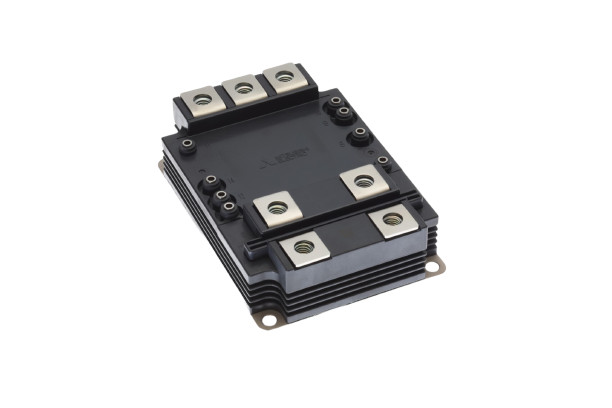
SiC remains the preferred choice for medium- to high-power industrial drives and higher-voltage platforms (typically 600 V–1700 V). Key advantages include:
- Switching losses typically 50–80 % lower than equivalent silicon IGBTs
- Practical switching frequencies of 20–50 kHz (versus 2–8 kHz for most IGBT designs)
- Superior thermal conductivity and junction temperatures up to 175–200 °C
- Measurable inverter efficiency gains of 0.8–2 % across typical speed ranges, with corresponding reductions in filter size and cooling requirements
These characteristics make SiC particularly effective in industrial pumps, fans, compressors, servo systems above several kilowatts, and traction-class applications. The higher switching frequency also permits smaller passive components and reduced acoustic noise.
GaN FETs in Motor Drives
GaN HEMTs and integrated GaN power stages excel at lower- to mid-power levels (generally up to several kilowatts and voltages to ~650 V). Their defining strengths are extremely fast switching, near-zero reverse-recovery charge, and very low gate charge. This enables:
- PWM frequencies of 50–100 kHz and beyond
- Inverter efficiencies frequently exceeding 99 % in optimized designs
- Significant reductions in heatsink size or complete elimination of heatsinks in many appliance and compact industrial drives
- Smaller, lighter inverters with improved torque smoothness and lower audible noise
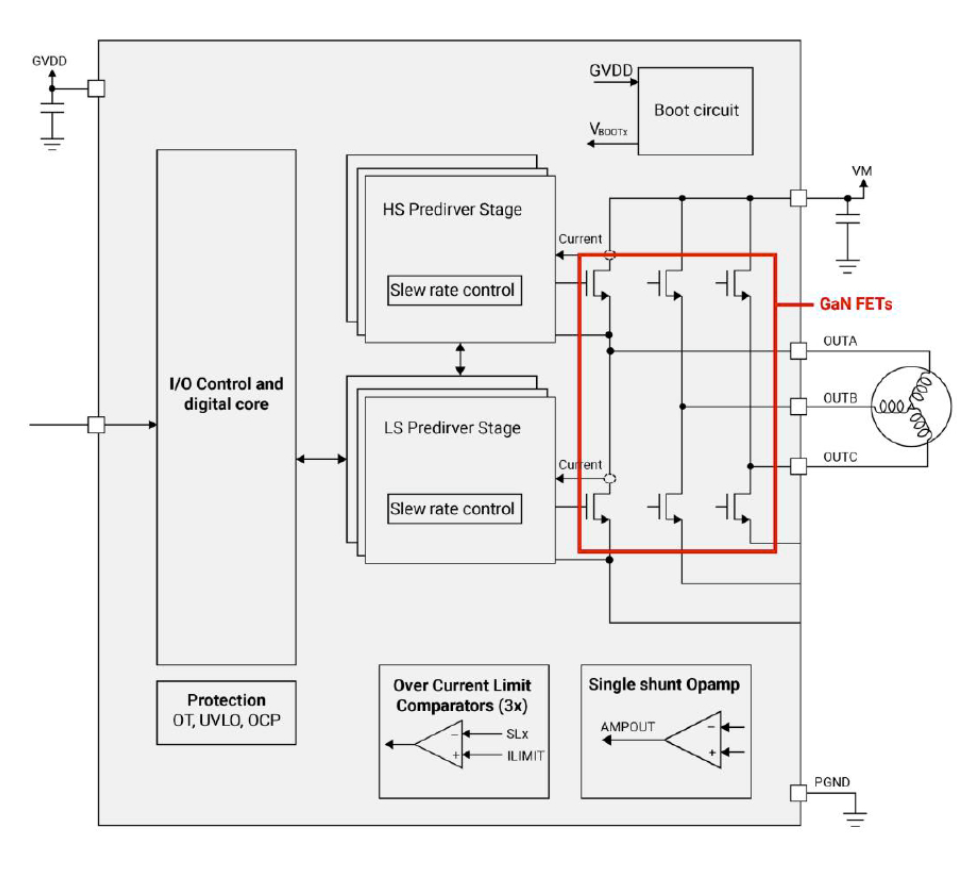
GaN is increasingly adopted in high-performance servo drives, appliance motors, circulating pumps, fans, and other applications where power density and dynamic response are critical. Integrated GaN motor-drive ICs further simplify design by combining half-bridge FETs, drivers, sensing, and protection in a single package.
Technical Installation in Industrial Environments
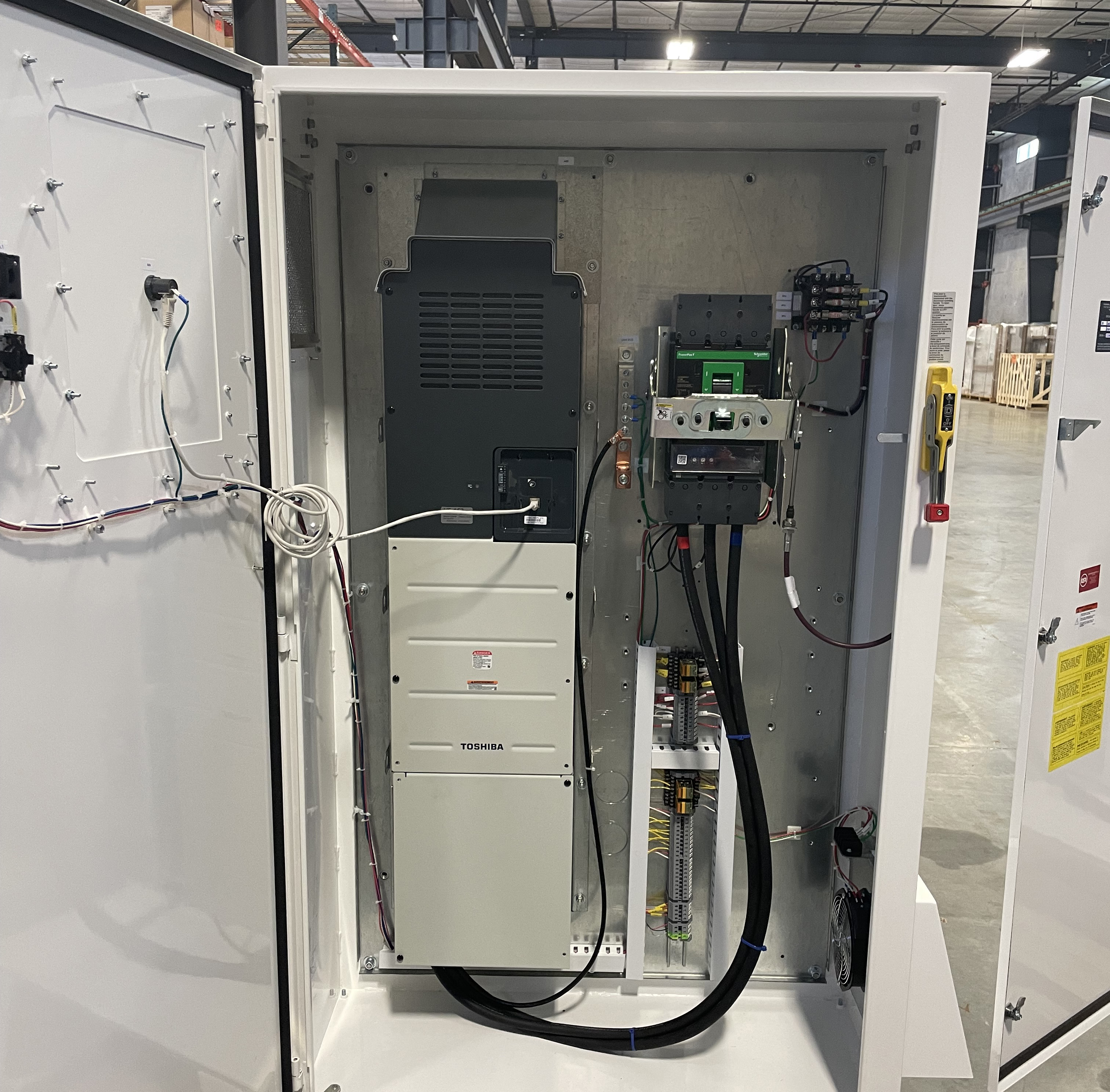
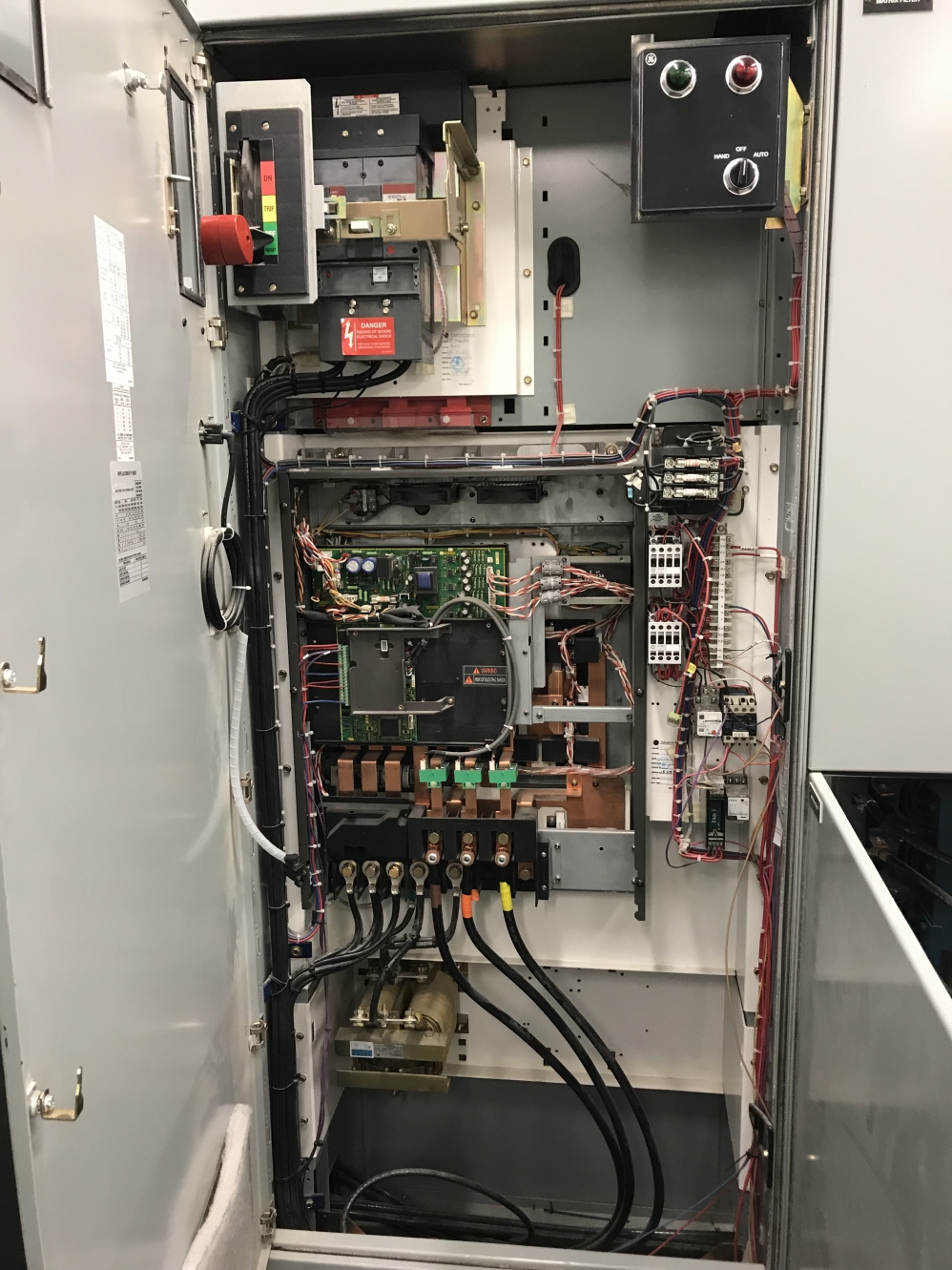
Successful deployment of SiC and GaN devices in industrial motor drives requires attention to several practical factors that differ from conventional silicon designs.
Gate drive and protection
Both technologies demand carefully designed gate drivers. SiC typically requires higher gate voltages and robust Miller clamping to prevent spurious turn-on. GaN often uses lower drive voltages but needs very low inductance layouts and fast short-circuit protection (response times of tens of nanoseconds). Isolated drivers with integrated protection features are strongly recommended.
Electromagnetic compatibility and dV/dt
The fast voltage and current edges generate higher-frequency EMI. Proper PCB layout, common-mode chokes, shielded cables, and carefully tuned output filters are essential. High dV/dt can also stress motor winding insulation; cable length and motor insulation class must be verified, and in some cases output reactors or sine-wave filters are required.
Thermal and mechanical considerations
Although losses are lower, local hotspot management and reliable thermal interfaces remain important. In harsh industrial settings—vibration, humidity, wide temperature swings, and possible corrosive atmospheres—packaging, conformal coating, and robust mechanical mounting are critical. Power cycling capability and long-term gate-oxide stability under industrial mission profiles should be confirmed with the device manufacturer.
System-level integration
Higher switching frequencies allow smaller magnetics and capacitors, but layout parasitics become more significant. Parallel device current sharing, busbar design, and decoupling must be treated with greater care than in traditional low-frequency IGBT systems. Comprehensive protection (over-current, over-temperature, desaturation or equivalent) must be validated under worst-case industrial fault conditions.
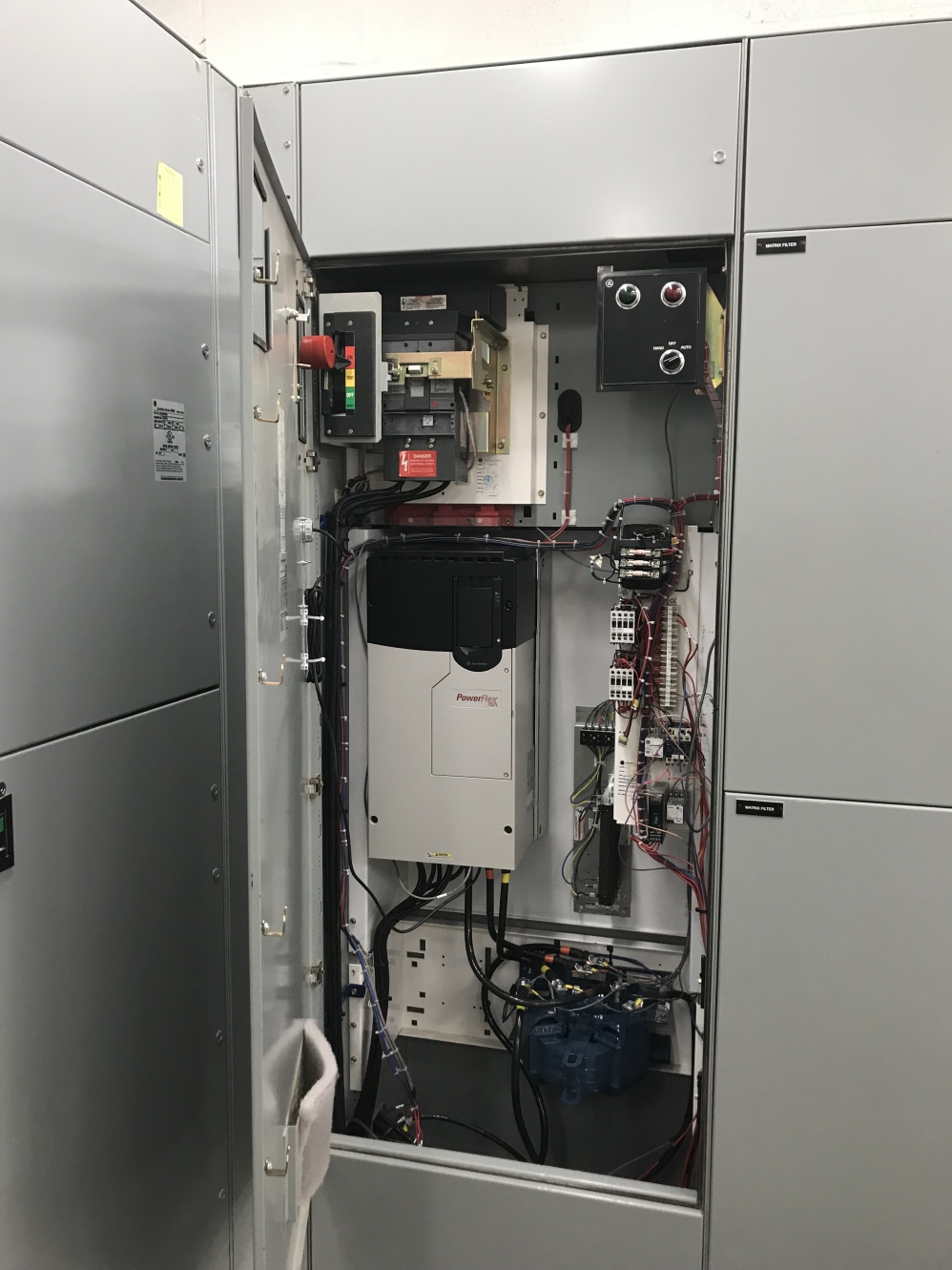
When these factors are addressed, SiC and GaN solutions deliver measurable gains in efficiency, power density, and system cost of ownership for industrial motor applications.